Meme coin scrutiny explained as Al Green presses Bessent over Trump's token
Need articles like this for your video? They help promote it on YouTube and Google — order them in the Telegram bot @sat_sit_bot. Articles with your video embedded are written and posted by the bot itself — on popular topical sites (no ads). Your first 50 articles are free.
· based on the channel Daniel Reed
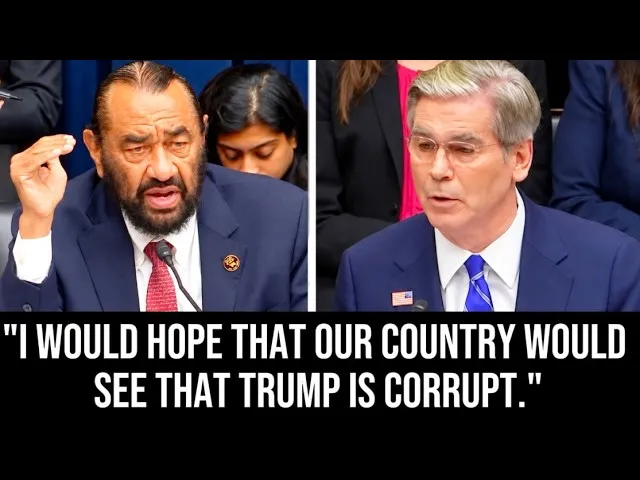
A meme coin is a cryptocurrency with no underlying business, cash flow or asset backing, priced purely on attention and the willingness of the next buyer to pay more. The scrutiny around Trump's token, which Senator Al Green raised with Treasury Secretary Scott Bessent during a congressional hearing, is really a question about what that structure means when the issuer is a sitting president. Green's line of attack was blunt: he pressed Bessent on whether a president selling a token to the public amounts to a scam, and Bessent's answers left the substance largely unaddressed 00:00.
What Al Green asked Scott Bessent about the meme coin
The core of the exchange is a conflict-of-interest question, not a technical one. Green framed the token as a vehicle through which a sitting president can profit directly from retail buyers, and he wanted Treasury to say plainly whether that is acceptable. Bessent, for his part, deflected toward general market principles rather than the specific token, which is the standard posture for an agency that does not regulate the asset class directly. That gap matters: Treasury handles sanctions, tax policy and financial stability, while token issuance and secondary trading fall to the SEC and CFTC. So a hearing can generate pressure and headlines, but it cannot by itself change how the coin trades. The practical takeaway for holders is that political outrage is not a catalyst with a mechanism behind it — no filing, no enforcement action, no rule change follows from a senator's questioning alone.
Why critics call the token a scam and what the label actually means
The scam charge rests on structure rather than on any single transaction. A token with no revenue and no claim on assets only pays early buyers if later buyers pay more, which is the definition of a greater-fool dynamic. Add concentrated ownership — a large share of supply held by the issuer or affiliated wallets — and the risk becomes concrete: insiders can sell into retail demand while outside holders absorb the drawdown. That is not proof of fraud, and calling it a Ponzi scheme is imprecise, because a Ponzi pays old investors with new money under a promise of returns. A meme coin promises nothing at all. The honest description is a speculative transfer of wealth with a marketing layer on top, and the disclosure that would normally accompany a securities offering is absent by design.
The access and laundering argument traders keep raising
A recurring claim in trading circles is that people buy politically branded tokens for access or to move money discreetly, not for the price chart. That theory is hard to verify and easy to overstate. What is verifiable is the mechanics: on-chain transfers are public, exchanges run know-your-customer checks at the fiat on-ramp, and large movements between wallets are visible to anyone with a block explorer. That makes meme coins a poor tool for laundering compared with the alternatives, even if the branding invites the suspicion. The access argument has more surface plausibility — a large token purchase is a visible, traceable signal — but no public evidence ties purchases to specific favors, and holders should treat the claim as speculation rather than a reason to buy or sell.
Meme coin, Ponzi scheme and pyramid scheme are not the same thing
These three terms get used interchangeably in arguments about political tokens, and the differences matter for anyone deciding how to treat the asset. The distinctions are worth stating plainly:
- A meme coin is an asset with no cash flow; its price depends entirely on demand for the token itself.
- A Ponzi scheme collects money from new investors and pays earlier ones, while promising a return that does not exist.
- A pyramid scheme pays participants primarily for recruiting new members, not for selling a product.
- A pump-and-dump involves coordinated buying, promotion and selling by insiders holding a large position.
A politically branded token can resemble the fourth category without meeting the legal test for the second or third. Regulators pursue fraud, misrepresentation and unregistered securities offerings; they do not pursue bad taste or poor odds. That is why hearings produce sound bites while enforcement, when it comes, arrives through court filings and exchange delistings.
What the hearing changes for holders and for the market
Very little changes mechanically, and that is the useful conclusion. No US Treasury Secretary can ban a token, freeze trading or force a refund; those levers sit with the SEC, the CFTC and the exchanges that list the asset. What hearings do accomplish is reputational and political: they raise the cost of future promotion, they push exchange compliance teams to review listings, and they feed into whichever legislative framework Congress eventually writes for digital assets. For a holder, the relevant signals are listing status, wallet concentration, liquidity depth and whether the issuer's affiliated addresses are selling. A senator's questions are noise against those four variables, however sharp the questioning gets 00:00.
Typical questions traders ask after a hearing like this
Most of the doubt that surfaces after a confrontation like Green's comes down to a few recurring worries. First, whether a political brand makes a token more likely to be shut down — in practice, enforcement targets conduct such as misleading promotion, not affiliation. Second, whether buying the token is illegal — it is not, though tax reporting on gains applies as with any other crypto asset. Third, whether insiders have already exited — that is checkable through public wallet data and should be checked before any purchase. Fourth, whether the whole asset class is a fraud — it is not, but the failure rate among meme coins is high enough that position sizing matters more than conviction. Treat the hearing as information about political risk, not as a trading signal.
The bottom line on meme coin risk and political tokens
The exchange between Al Green and Scott Bessent puts a spotlight on a real structural problem: a token with no cash flow, concentrated insider ownership and a famous name attached is a wealth transfer dressed as an investment. Nothing in the hearing changes how the asset trades, and no Treasury action follows from it. What it does confirm is that political scrutiny of branded tokens is now a permanent feature of the market, and that holders should price that scrutiny as background risk rather than as a catalyst. Daniel Reed's breakdown of the hearing is a useful record of how the argument was framed on both sides, and of how little either side was willing to say about the mechanics.
FAQ
Key takeaways
- Senator Al Green questioned Treasury Secretary Scott Bessent about Trump's meme coin during a congressional hearing.
- The exchange centered on whether a sitting president should profit from a token sold to the public.
- Critics call the structure a greater-fool or Ponzi-style scheme; supporters frame it as a tradable digital collectible.
- Most meme coins have no cash flow, no claim on assets and no regulatory filing behind them.
- Treasury has no direct authority over meme coins; market oversight sits with the SEC and CFTC.
Source: WHOA: Al Green GRILLS Bessent over Trump's meme coin “scam” · Markdown version
Questions & answers
Is Trump's meme coin legally a scam?
No court or regulator has ruled it a scam, and the label is a political characterization rather than a legal finding. The structure — no cash flow, no asset backing, concentrated insider holdings — creates a greater-fool dynamic that critics describe as fraudulent in substance. Enforcement, if it comes, would target specific conduct such as misleading promotion, not the existence of the token.
Does the Treasury Secretary regulate meme coins?
No. Treasury handles sanctions, tax administration and financial stability, but token issuance and secondary trading fall under the SEC and CFTC. That is why Bessent could be questioned at length without committing to any action against the token.
What is the difference between a meme coin and a Ponzi scheme?
A Ponzi scheme promises returns and pays earlier investors with new money, which is fraud. A meme coin promises nothing and has no yield mechanism; its price depends only on demand for the token. The two are often conflated in political argument, but only one involves a misrepresentation of returns.
Can I check whether insiders are selling a political token?
Yes, if the token trades on public blockchains. Wallet concentration and large transfers from issuer-linked addresses are visible on block explorers, and several analytics platforms track them. Checking those figures before buying is more useful than following hearing coverage, which has no direct effect on price.