Binary options strategy compared
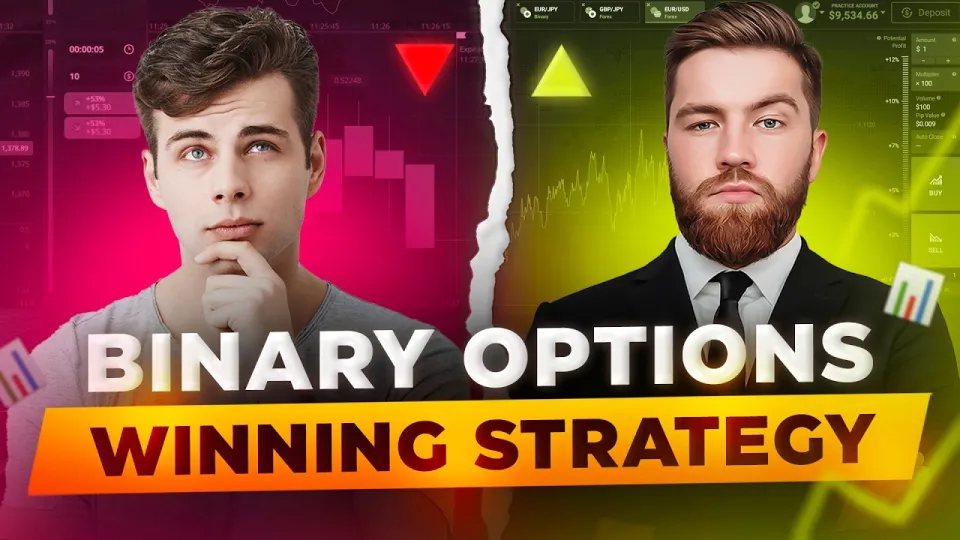
· based on the channel Binary option
Binary options trading strategy is best built around one clear edge, a fixed risk per trade and a strict filter for when not to trade; of the common approaches, trend-following on 5-15 minute charts with support and resistance confirmation produces the most repeatable results for beginners, while pure candle-pattern scalping and news trading demand far more screen time and discipline. A demo account on a broker such as Quotex lets you test any of these approaches on 100 or more trades before real money is at stake.
What makes a binary options strategy profitable in the first place
Profitability in binary options is a math problem before it is a chart problem. Because the payout is fixed, the required win rate depends entirely on the percentage the broker offers: at an 80% payout you need about 55.6% accuracy to break even, at 70% you need roughly 59%, and at 90% about 52.6%. That means a strategy that wins 6 trades out of 10 at an 80% payout returns about 8% of the amount risked per trade cycle, while a 50/50 strategy slowly bleeds the account regardless of how good the entries look.
Three elements decide whether a setup survives that math:
- A directional filter — a higher-timeframe trend, a moving average or a session bias — so trades are not taken against the dominant flow.
- A precise entry trigger — a level touch, a candle close or a breakout — so the trade is repeatable rather than discretionary.
- A fixed expiry that matches the trigger: 1-5 minutes for level bounces, 15-60 minutes for breakout continuation.
Anything that cannot be written down in those three lines is not a strategy yet; it is a feeling.
Trend following with support and resistance confirmation
Trend following is the most widely taught binary options strategy because it converts a noisy chart into a single question: is price making higher highs and higher lows, or lower highs and lower lows? On a 5-minute or 15-minute chart, mark the last two swing highs and swing lows, then only take CALL trades while the structure is rising and PUT trades while it is falling. The entry comes when price pulls back into a level — a previous swing point, a round number or a moving average — and a candle closes back in the direction of the trend.
Practical rules that keep this approach honest:
- Use one moving average (for example 50-period) as a bias line and stay on one side of it.
- Skip trades when price is compressed inside a range narrower than the average candle of the last 20 bars.
- Match expiry to the pullback: 3-5 minutes on a 5-minute chart, 15 minutes on a 15-minute chart.
- Stop for the session after two consecutive losses, because structure-based setups tend to fail in clusters during news.
The weakness is chop: in a sideways market the same levels get hit repeatedly and the trend filter produces false signals. That is why the range filter above matters as much as the entry itself.
Candle patterns and short-expiry scalping
Candle-pattern scalping uses engulfing bars, pin bars and inside-bar breakouts on 1-minute charts with expiries of 1-3 minutes. It is the fastest style and the one most often marketed as a "win strategy", but the fixed payout punishes it: a single candle on a 1-minute chart is heavily influenced by spread and random ticks, so the edge per trade is thin and transaction costs in payout terms are high. Pin bars at clearly tested levels — a wick rejecting a level touched three or more times — are the strongest version of this setup, while patterns in the middle of nowhere are noise.
If you test this style, keep a log of at least 50 trades and record the pattern type, the level quality and the result. Traders who do this usually discover that only one or two pattern types carry their results, and cutting the rest improves the win rate more than any indicator change.
News trading and the risk of the first minutes
News trading tries to capture the burst of volatility after scheduled releases such as US Non-Farm Payrolls, CPI or central-bank rate decisions. The appeal is a fast directional move; the problem is that brokers widen spreads and the first candle after a release can spike in both directions before settling. A safer version of the approach waits for the first 5-10 minutes after the release to pass, identifies the direction the price held, and trades the continuation on a 5-minute expiry with a level-based entry. Many experienced traders simply avoid opening positions 5-10 minutes before and after high-impact releases and treat news as a reason to be flat, not a reason to click.
Risk management rules that decide the outcome
Risk management is the part of a binary options trading strategy that determines survival, because a fixed payout means one oversized trade can erase many correct ones. A workable framework: risk 1-2% of the balance per trade, cap the day at 5-10 trades, and stop after three losses in a row or a 5% drawdown. Keep the stake constant rather than doubling after a loss — martingale-style recovery turns a normal losing streak of four or five trades into a wiped account, and losing streaks of that length happen even with a genuine 60% win rate.
Also separate testing from trading: run a new strategy on demo for at least 100 trades, then move to the smallest real stake the broker allows and scale only after another 100 trades hold the same win rate.
Typical questions and doubts from traders
The questions that come up most often around binary options strategy are about trust in the platform, the size of the minimum deposit and whether a strategy that worked on demo will work live. On the platform side, the recurring concern is link reliability and whether a broker is regulated in the trader's jurisdiction — the practical answer is to verify licensing and withdrawal terms on the broker's own site before depositing, and to test a small withdrawal early. On the strategy side, the honest answer is that demo results and live results differ mainly through execution discipline and payout changes, not through the chart itself, so the first live month should be treated as a test at minimum stake.
Platforms used for testing these strategies
Quotex, Pocket Option and Binarium are the three brokers referenced in the Binary option channel's breakdown, and all three offer demo accounts, short expiries from 5 seconds to hours and payouts that typically range from about 60% to 92% depending on the asset and time of day. The differences that matter for strategy testing are the asset list, the minimum stake and the payout on the pairs you actually trade. Links to all three, plus the VPN tool mentioned alongside them:
- Quotex — https://dakaklik.com/_quotex?creative_id=iubmSlOv-kA
- Pocket Option — https://dakaklik.com/_PocketOption?creative_id=iubmSlOv-kA
- Binarium — https://dakaklik.com/_Binarium?creative_id=iubmSlOv-kA
- NordVPN — https://dakatop.link/Nord_us?creative_id=iubmSlOv-kA
Conclusion
No single binary options strategy wins on every chart, but the comparison is clear: trend following with support and resistance confirmation gives the most repeatable edge for most traders, candle scalping suits only those who can log and refine dozens of trades, and news trading is better treated as a period to avoid. Whatever the choice, the fixed payout makes risk per trade and a written entry checklist more important than the indicator set. The Binary option channel covers these setups in video form and links the platforms used for testing; if you want to start with a demo account on the broker featured there, open Quotex through this link and run the trend-following rules above for 100 trades before going live.
Key takeaways
- Binary options pay a fixed percentage on a correct prediction, so a strategy must win roughly 55-60% of trades at an 80% payout just to break even after losses.
- Trend-following on 5-15 minute charts is the most repeatable approach for beginners because it uses one direction filter instead of guessing reversals.
- Fixed trade sizes of 1-2% of the account balance per position prevent a losing streak from wiping out the deposit.
- Quotex, Pocket Option and Binarium all offer demo accounts, so a strategy can be tested on 100+ trades before real money is used.
- News-based trading requires avoiding entries 5-10 minutes before and after high-impact releases such as NFP or CPI.
Source: Binary Options Strategy | Binary Option Trading | Which Strategy Works Best? · Markdown version
Questions & answers
What win rate do I need to profit with binary options?
It depends on the payout. At 80% you need about 55.6% winning trades to break even, at 70% about 59%, and at 90% about 52.6%. Anything above those thresholds is profit, which is why traders prefer assets with payouts of 80% or higher.
Is a 1-minute expiry strategy better than a 15-minute one?
Shorter expiries produce more trades but each one is more exposed to spread and random ticks, so the edge per trade is thinner. Most beginners do better with 5-15 minute expiries where a level or trend signal has time to play out.
Can I test a binary options strategy without risking money?
Yes. Quotex, Pocket Option and Binarium all provide demo accounts with virtual funds. Test at least 100 trades on demo, keep a log of the setup type and result, and only move to a small real stake once the win rate holds.
Should I use martingale to recover losses?
Doubling the stake after a loss is the fastest way to lose an account, because losing streaks of four or five trades happen even with a genuine 60% win rate. A fixed 1-2% stake per trade with a daily stop is far safer.